
How LEGO's New Hub Drives Innovation & Emission Reduction
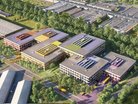
LEGO is cementing its legacy of innovation and sustainability with a new campus in Billund, Denmark, set to open in 2027.
Known for its colourful bricks and timeless creativity, LEGO is blending its brand ethos into a 50,000-square-metre Innovation Campus that prioritises eco-friendly practices across every facet of the building, from its timber walls to green spaces.
Developed with input from LEGO’s employees, this new campus will soon be the central hub for all product design and digital experiences, bringing LEGO’s entire creative team under one roof.
By focusing on emissions reductions and resource efficiency, LEGO aims to ensure that its new campus aligns with ambitious sustainability goals and serves as an inspiring workplace for its 1,700 creative staff, including 600 designers.

Building with purpose: Creative design for sustainability
Sustainability is at the heart of LEGO’s Innovation Campus, which is designed to minimise indirect emissions, known as Scope 3 emissions, across its supply chain.
These Scope 3 emissions represent a company's broader environmental impact, including emissions from Category 1 Purchased Goods and Services, Category 2 Capital Goods and Category 7 Employee Commuting.
LEGO has integrated these considerations directly into the campus design to minimise environmental impacts at each step.
A key component in this approach is LEGO’s commitment to sourcing materials responsibly. FSC-certified timber, used for the building's structure, helps reduce carbon emissions tied to supply chains.
By choosing wood certified by the Forest Stewardship Council, LEGO addresses its goal to use sustainable materials and to keep emissions as low as possible.
Additionally, LEGO is pursuing LEED Platinum certification for the campus, indicating top standards in environmental efficiency and low resource use.
LEED (Leadership in Energy and Environmental Design) is a globally recognised certification for green building, reflecting efforts to reduce energy consumption, enhance biodiversity and conserve water.
The building’s six-module structure will feature ample green spaces, play areas and maximised daylight to encourage creativity.
Creating a collaborative, eco-friendly workplace
LEGO’s new campus will host a cross-functional team that includes product developers, marketers, digital designers and quality teams all within the same complex.
Centralising these operations not only brings together creative minds but also addresses the "Employee Commuting" category of Scope 3 emissions. With fewer teams spread across various locations, employee travel requirements should decrease, potentially lowering emissions associated with transport and daily commutes.
LEGO’s Chief Product and Marketing Officer, Julia Goldin, emphasises that this single collaborative campus embodies the "fun and innovation" that are core to the LEGO brand.
She highlights how the design reflects the modularity of LEGO bricks, adding that "Innovation Campus will be an inspiring workplace that honours the modular design of LEGO bricks."
Julia also believes the campus will act as a unifying force, drawing together teams to push the boundaries of creative design across physical products and digital experiences.
The facility will also house the world’s largest library of LEGO elements, an extensive collection of more than 20,000 unique components in 70 different colours. This dedicated resource is part of LEGO’s strategy to encourage limitless creativity among its designers and developers.
A commitment to carbon reduction
The construction of the Innovation Campus is part of LEGO’s wider commitment to achieving net-zero emissions, with efforts already recognised by Sustainability Magazine, which placed LEGO high on its 2024 list of top sustainable companies.
Niels Christiansen, LEGO’s CEO, reinforced that the campus demonstrates LEGO's dedication to responsible environmental practices.
Niels is excited to watch the campus take shape, stating: "I am thrilled to mark the beginning of construction of another new campus as we continue to invest in attractive workplaces for our colleagues around the world.
"Not only is the building design creative at its core – it is also true to our sustainability ambitions, including our commitment to reducing carbon emissions."
Throughout the 18-month design process, LEGO conducted extensive consultations to ensure the campus would offer a dynamic and inspiring environment.
Incorporating play zones, communal areas, and LEGO’s signature PlayWay pathway, the campus layout encourages connectivity and interaction among employees. With its design of FSC-certified wood, LEGO’s new campus reflects its sustainability ethos through every architectural decision.
In summary, LEGO’s Innovation Campus in Denmark is more than just a building – it’s a testament to LEGO’s goals of minimising environmental impact while fostering innovation.
The campus design incorporates sustainable building materials, extensive green spaces, and energy-efficient features that demonstrate LEGO’s holistic commitment to a greener future.
Receive the next edition of Scope 3 Magazine by signing up for its newsletter.
As part of this portfolio, make sure you check out Procurement Magazine and also sign up to our global conference series - Procurement & Supply Chain LIVE.
Scope 3 Magazine is a BizClik brand.